

Are you tired of the concept of thermal precision that can withstand the test of time? As an example, the worldwide thermocouple temperature-sensing market is expected to increase from USD 6.93 billion in 2025 to USD 10.05 billion in 2030, a high rate of 7.7% CAGR. To manufacturing, energy, and aerospace experts in the industry, the fact that this growth is happening speaks of one thing, and that is that reliable and accurate temperature measurement is non-negotiable.
Upon examining further, the K-type thermocouple comes into view as a favorite in low in-service work because of its extensive range, hardiness, and ability to withstand the most extreme environments. We will discuss the reason why it is so trusted in this blog and how it provides you with the accuracy and reliability you need in your processes.
How Does the K-Type Thermocouple Achieve Unmatched Reliability?
The difference between the reliability of the K-type thermocouple and other types is that it is designed and composed of a combination of materials: Chromel and Alumel. The two combined form a powerful thermoelectric junction, which is able to measure a broad spectrum of temperatures between -200 and 1260°C and still give a stable reading. The combination of sensitivity and strength gives it an excellent option in industrial environments where there is a need to rely on performance.
The K-type thermocouple has high oxidation resistance and can therefore operate in reactive or harsh environments, unlike other thermocouples. It is a reliable product in industries where the cost of disruption could be expensive due to its durability and both high and fluctuating temperatures of operation.
Why Does the K-Type Thermocouple Perform Best in Harsh Industrial Conditions?
The attributes that make the K-type thermocouple an indispensable tool in any of the circumstances where consistency, safety, and durability are important include the following:
- Large temperature range: Can be used in both cryogenic and high temperatures.
- Corrosion resistance: It is a reliable component in oxidizing and inert environments and has a minimum of wear.
- Mechanical strength: Stands up to vibration, pressure, and mechanical stress.
- Quick response time: Measures the sudden change in temperature in seconds; hence, real-time information.
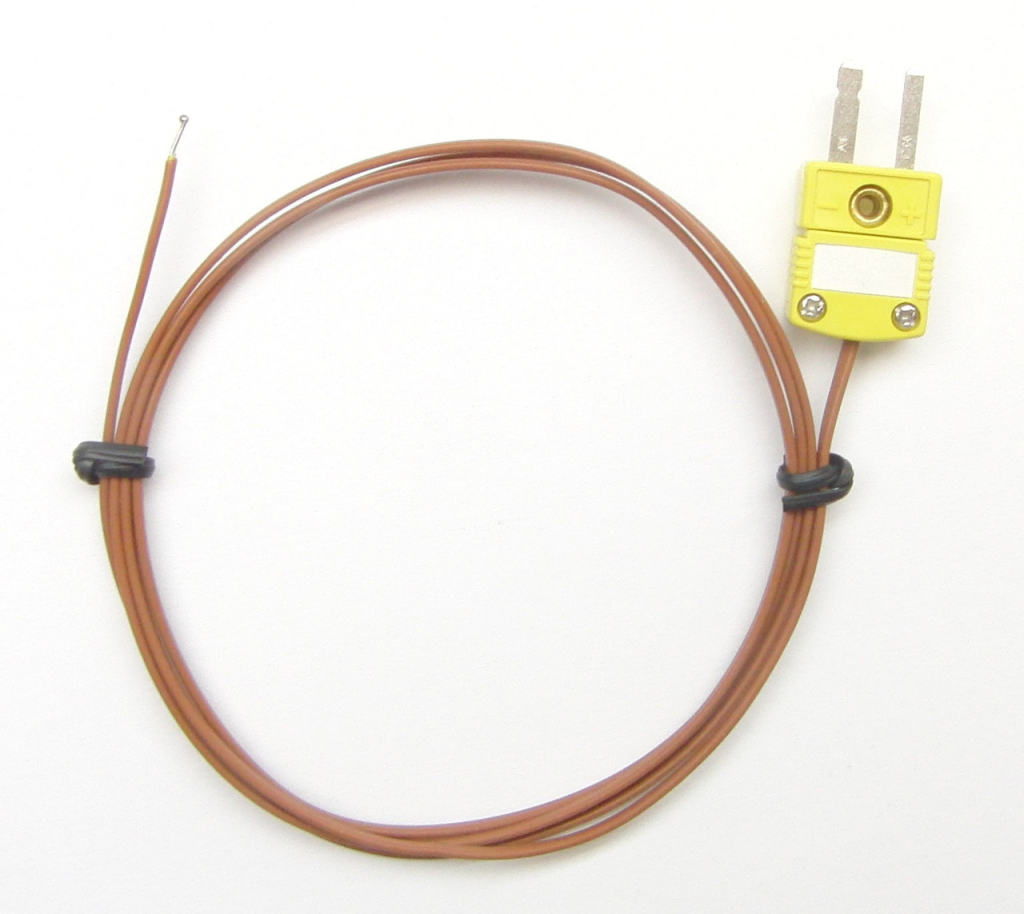
- Standardized sizes and connectors: It is easy to install and maintain because of standardized sizes and connectors.
- Stable performance: Achieves uniform performance even when working for long periods.
How Accurate Is the K-Type Thermocouple in Real-World Applications?
The K-type thermocouple is known to have a reliable accuracy of up to ±1.1°C or 0.4 °C, and this has allowed it to provide a level of precision that is important in industrial processes that may require it. Even more impressive is the fact that it does not lose measurement integrity in an extended span of temperatures, even though it is technically accurate.
Such industries as aerospace, car testing, and pharmaceuticals rely on this accuracy to maintain systems in control and conformity. The K-type thermocouple helps to minimize the risk of a drifting of data drift and errors and provides each measurement with the contribution to the quality of the processes and efficiency of the energy.
What Innovations Are Shaping the Future of K-Type Thermocouples?
The K-type thermocouple is still under contemporary technology.
- Intelligent calibration: The calibration errors are automatically corrected, leaving minimal man-hours to work on.
- Wireless integration: Remote monitoring is easily done in real time without any complicated wiring.
- Miniaturized probes: These find their way in small machines, robotics and laboratory usages.
- Predictive analytics: Artificial intelligence devices can understand wear or drift so as to avert the decline in performance.
- Digital compatibility: When making arrangements to turn a factory smart, it is compatible with IoT-based monitoring systems.
- Environmental materials: New protective coverings will conserve on waste and improve sustainability.
What is the best way to configure K-type Thermocouple to make it the most efficient?
- Surrounding material: it is coated in stainless steel or Inconel to ensure high temperature and prevent corrosion are avoided.
- Insulation type: Fiberglass or Ceramic insulation which is safer and has better signal quality.
- Probe design: Choose the kind of the probe to be applied depending upon the purpose, i.e. surface, immersion probe or penetration probe.
- Calibration standards: In line with IEC 60584-1 or ASTM E230, the same is used to provide uniform data.
- Connector quality: When using high-grade oxidation-free connectors, ensure quality contact.
- Service cycle: Frequent checking and recalibration can increase the life and precision.
Why Does the K-Type Thermocouple Remain a Reliable Standard in Industry?
The K-type thermocouple has continued to be the reference for precision and durability in industrial temperature. The fact that it has been operating well in the most hostile conditions demonstrates why it remains a reliable option among professionals who appreciate accuracy and reliability. With the development of industries to become more automated and data-oriented, the necessity to find a balance between reliability and innovation in sensors is even more crucial.
As an organization that is considering such reliable temperature solutions, Tempsens provides a considerate example. Its engineering style and emphasis on useful performance both indicate how the current state of thermocouple design can be useful in addressing the increasing needs of industrial applications without oversimplifying the procedure.