

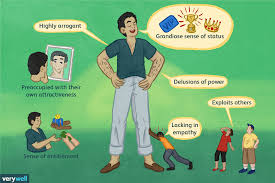
Humanity is not simple in behavior, and there are certain patterns of personality that may significantly influence the relationship of people to others. One of such patterns is the use of the word sociopath to explain the individual who tends to exhibit continuous antisocial behavior and indifference towards the behavioral standards and emotions of other individuals. Although the phrase is widely applicable in daily speech, the psychological definition is more sophisticated and has its foundation in clinical knowledge.
To have a better understanding of what constitutes this condition, it is beneficial to read the opinion of the experts in this area, like this guide on sociopath traits, which describes the emotional and behavioral traits related to it.
What Defines a Sociopath?
Sociopath is a term that is closely connected with antisocial patterns of personality. People with such personalities tend to lack the ability to empathize, be responsible, and be able to follow societal regulations. Nevertheless, one should remember that not all people who manifest these tendencies can be classified into a narrow diagnostic category.
In most scenarios, a sociopath portrays a fixed nature of manipulation, impulsiveness and lack of concern for consequences. These may be behaviors that are not very noticeable but which may increase over time. This leads to a poor relationship with such individuals or even a detrimental relationship.
Additionally, these trends are not necessarily reflected in very visible and severe forms. Rather, they may manifest themselves in daily life, and others may not be able to realize the underlying problem. Thus, awareness and education are important in identifying and dealing with such patterns at an early stage.
Characteristics that are common to Sociopathic Behavior.
Learning about the behavioral patterns of a sociopath will enable people to identify red flags in personal and work relationships. These characteristics tend to be emotional, and an inability to build any real relationships.
Lack of Empathy
Among the most differentiating traits is a decreased capacity to empathize with other people. Whereas most individuals can sympathize and empathize with friends and family they may be unable to feel emotions and empathize with a sociopath. This may therefore result in cold or insensitive actions.
Manipulative Tendencies
Manipulation of situations or individuals to achieve personal gains is one more important characteristic. A sociopath, in most of the instances, employs charm or deception to get his/her way. This behavior can be calculated, but in many cases, it is based on some deeper failure to connect with others genuinely.
Impulsivity and Risk Taking
There is also impulsive behavior. They can make decisions without having long-term consideration and this may lead to hazardous or dangerous consequences. In the long run, the trend may interfere with personal stability as well as relationships.
Disregard for Social Norms
A sociopath does not pay much attention to the rules and norms in society. This does not necessarily entail criminal acts, but may be lying, breaking promises or doing what neglects the rights of others.
Causes and Contributing Factors.
The genetic, environmental, and psychological factors contribute to the development of the sociopath traits. There is no one reason as to why these patterns arise; there are many factors that could lead to the development of these patterns.
Early Life Experiences
Childhood experiences are very important. The way an individual perceives relationships and emotions may be determined by trauma, neglect, or irregular parenting. With time, the experience can be a source of sociopath tendencies.
Biological Influences
It is possible that brain structure and brain function can also be a factor (research). There are regions of the brain that can be linked to emotional regulation and impulse control, and that might not be operating in the same way in individuals who possess such traits.
Environmental Factors
Harmful behavioral patterns may be reaffirmed by the social environment, such as exposure to violence or instability. Consequently, people are likely to implement coping skills that are secretly sociopathic.
The Sociopath Traits and the Relationships.
It is a fact that relationships are usually severely affected when one of the partners turns out to be sociopathic. Given that emotional connection is one of the core elements of healthy relationships, a form of a deficit of empathy may become a significant problem.
In most situations, a sociopath can seek connections out of convenience or self-interest instead of establishing a connection. Although that might not necessarily be noticeable at once, with time, it might cause feelings of confusion, frustration, or emotional damage to other people involved.
Moreover, communication can be complicated. Sincere and free communication needs emotional sensitivity and that may be restricted in a person with these characteristics. As a result, there can be more misconceptions and disagreements.
The difference between Sociopath and Psychopath.
Even though the two have been used interchangeably, a sociopath and a psychopath differ slightly, albeit in subtle ways. Both are classified as antisocial personality patterns, but both the behavior and reactions to emotions may be different.
The sociopath, in most cases, is more impulsive and can easily lose his or her temper, whereas the psychopath can seem to be more controlled and calculated. But both of them are emphatic and are prone to manipulation. These differences can be used to understand various behavioral patterns.
Diagnosis and Professional Analysis.
Sociopath traits are also to be identified with caution by a mental health professional. It is imperative because most behaviors have the potential of overlapping with other conditions, which require a comprehensive evaluation.
Medical workers usually involve the history of a person, his/her behavioral pattern, and emotional reactions. They also assess the way these traits affect everyday life and relations. The tempting fact about self-diagnosis is that it is not a reliable method. Thus, it is advisable to consult an expert at all times.
Management and strategies of treatment.
Although the treatment of entrenched personality traits is not an easy task, there are available treatment options. Through proper support, one can know how to deal with his actions and how to relate better with others.
Therapy
One of the best procedures is psychotherapy. With treatment, victims may be able to investigate underlying motivations and acquire more favorable coping mechanisms. In the long run, it may result in better emotional regulation and behavioral restraint.
Behavioral Interventions
Organized interventions can also be used to deal with impulsivity and destructive habits. The strategies aim at establishing responsibility and fostering good judgment.
Support Systems
Family, friends, and mental health support would have a significant role to play. A good support system has the ability to give guidance, stability, and support during the process.
Problems with Vision on the Treatment of Sociopathic Traits.
It does not always work out easily. Most sociopaths will not label their behaviors as problematic. Consequently, they might be less likely to consult.
Moreover, improvements are also gradual. Being highly ingrained, these characteristics cannot be changed without continuous effort and dedication. Nevertheless, through perseverance and the appropriate encouragement, the change can be achieved.
Breaking Misconceptions
A sociopath is commonly viewed as a dangerous or hopeless person in the eyes of society. Although there are people who indulge in evil acts, not all of them do. Several individuals exhibiting such characteristics are able to live normal lives and respond to treatment.
One needs to be understanding of the topic and not judgmental. In such a way, the society may decrease the stigma and make people turn to the help they need.
The Importance of Awareness
Consciousness is an important aspect in sociopath treatment. By being aware of the symptoms and actions related to this condition, individuals are in a position to act in response to such actions.
Education is a starting point of change for those who suspect that these patterns occur in themselves or others. Timely detection can be achieved through early recognition, which can have a great impact.
Making Progress in Healthier Relationships.
To create healthier relationships, one needs effort, communication, and emotional awareness. Although that can prove to be very difficult when one has sociopathic tendencies, it is not impossible.
Through professional support and dedicated work, people can have a chance to acquire skills of interpersonal relations and learn to make their way in relations. In the long run, these enhancements may result in a deeper and more consistent relationship.
Final Thoughts!!
Individuals and society at large must understand the delicacies behind a sociopath. Through research on the characteristics, causes, and remedies of the problem, one is able to see that change can be achieved with the appropriate care and attitude.
Heartedness, understanding and professional counseling can be very useful in managing such behaviors and enhancing the general well-being. To find more information and help, Nashville Mental Health can be a good choice to provide people with information about those difficulties and help them to better understand and manage those problems.