

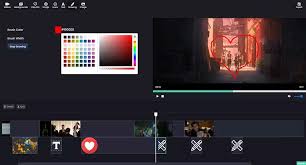
1. Introduction to JavaScript Video Editors
In the digital era, video content has become the backbone of online communication, entertainment, and marketing. From social media influencers to professional filmmakers, the demand for video editing tools has skyrocketed. Traditionally, video editing was confined to desktop applications like Adobe Premiere Pro or Final Cut Pro. However, the rise of JavaScript video editors has revolutionized the landscape by enabling video editing directly within web browsers. These web-based tools, built using JavaScript, HTML5, and WebAssembly, allow users to edit, trim, and enhance videos without installing any software. They bring convenience, accessibility, and flexibility, making video editing more inclusive for developers, creators, and businesses. The JavaScript ecosystem has matured to the point where powerful libraries and frameworks can now handle complex multimedia tasks that were once thought impossible for browsers.
2. How JavaScript Powers Modern Video Editing
JavaScript has evolved from a simple scripting language to a robust ecosystem capable of handling real-time multimedia processing. At the core of JavaScript video editors lies the integration of modern web technologies such as HTML5 video elements, WebGL for rendering, Web Audio API for sound processing, and WebAssembly for performance-heavy tasks. Libraries like FFmpeg.js, Video.js, and Canvas API empower developers to manipulate video frames, add effects, and export files directly in the browser. For instance, FFmpeg.js, a JavaScript port of the powerful FFmpeg library, allows developers to compress, cut, and merge videos with high efficiency. The introduction of frameworks like React and Vue.js further enhances UI/UX design, enabling smooth drag-and-drop timelines, preview panels, and filter controls. With these advancements, JavaScript video editors have become not only functional but also visually appealing and user-friendly.
Moreover, cloud integration is another aspect of this innovation. By combining JavaScript with cloud APIs and WebRTC, editors can facilitate collaborative editing sessions, where multiple users can work on the same video project simultaneously. This feature is crucial for remote teams, content studios, and e-learning platforms that rely on teamwork and instant updates. JavaScript’s asynchronous nature, powered by Promises and async/await syntax, ensures smooth video processing without freezing the browser, maintaining responsiveness even during heavy rendering operations.
3. Popular JavaScript Video Editing Libraries and Frameworks
The growing popularity of browser-based editing has given rise to several powerful JavaScript libraries and frameworks tailored for video manipulation. Among the most widely used is FFmpeg.js, an Emscripten-compiled version of FFmpeg that enables users to perform advanced video editing tasks directly in the browser. Developers can trim, resize, transcode, or apply effects without relying on external software. Video.js, on the other hand, is an open-source HTML5 video player that supports plugins for editing, filters, and overlays. Its flexible architecture allows developers to extend functionality with custom controls or integrate external APIs for advanced editing capabilities.
Another noteworthy library is WaveSurfer.js, primarily designed for audio visualization but also used in video editors to manage soundtracks and waveforms. Similarly, Popcorn.js allows developers to synchronize multimedia events like captions, images, and text overlays with video playback. For rendering animations and visual effects, Three.js and PixiJS are often used in combination with video frameworks, providing GPU-accelerated graphics that enhance editing quality. Additionally, Clappr and Plyr are lightweight JavaScript video players that developers integrate for simpler editing needs. These libraries empower both beginner and professional developers to create customized, web-based video editors that suit various industries—from e-learning to entertainment.
Cloud-based services such as Cloudinary and Mux also integrate seamlessly with javascript video editor enabling real-time video processing, streaming, and encoding. This integration means that users can upload, edit, and publish videos online with minimal latency and maximum efficiency. In essence, the combination of these libraries and APIs demonstrates JavaScript’s unmatched versatility in powering the next generation of video editing tools.
4. Benefits and Applications of JavaScript Video Editors
The advantages of JavaScript video editors extend far beyond mere convenience. The foremost benefit is accessibility. Users no longer need powerful computers or expensive software licenses—editing can be done from any device with an internet connection. This democratizes video production, allowing students, small businesses, and independent creators to compete in a digital landscape previously dominated by large studios. Additionally, web-based editors offer cross-platform compatibility, functioning seamlessly on Windows, macOS, Linux, and even mobile browsers. This eliminates the traditional barriers of operating system limitations.
Another key advantage is real-time collaboration. Many JavaScript video editors enable multiple users to edit the same project simultaneously through cloud synchronization. This capability enhances productivity and team efficiency, particularly for media companies and educational institutions. Furthermore, JavaScript video editors are highly customizable, allowing developers to integrate unique features such as AI-powered enhancements, automatic captioning, or real-time background removal. This flexibility opens up endless opportunities for innovation in fields such as marketing, journalism, and online education.
From a business perspective, JavaScript video editors also reduce costs. There’s no need for heavy local installations, updates, or specialized hardware. Hosting the editor on a cloud platform means easier maintenance and scalability. Companies can even offer video editing as a service (VEaaS), monetizing their platform through subscriptions or pay-per-use models. Lastly, because these tools run on the web, updates and improvements can be rolled out instantly, ensuring that users always have access to the latest features without downloads or patches.
5. The Future of JavaScript in Video Editing
The future of JavaScript video editors is incredibly promising, driven by continuous advancements in web technologies and user expectations. With the growing adoption of WebAssembly (WASM), browser-based editors are becoming faster and more powerful, rivaling native desktop software in performance. This means that users will soon be able to perform advanced tasks such as multi-track editing, 3D transitions, and real-time rendering entirely within a browser tab. Artificial Intelligence (AI) and Machine Learning (ML) are also transforming the landscape. Features like automatic scene detection, noise reduction, and AI-based video summarization are increasingly being integrated using TensorFlow.js and similar frameworks.
Moreover, the rise of progressive web apps (PWAs) will allow users to install video editors directly from the browser, blending the best of both worlds—online accessibility and offline functionality. This hybrid approach ensures that editing projects can continue even without an active internet connection, syncing automatically once connectivity resumes. The integration of AR/VR editing tools using JavaScript frameworks like A-Frame and Babylon.js will further expand the creative possibilities, enabling immersive storytelling experiences.
In the long term, JavaScript’s dominance in web development ensures that its role in video editing will continue to grow. As browsers evolve to support higher performance APIs, JavaScript video editors will become a standard tool for creators, educators, marketers, and developers worldwide. They embody the future of digital creativity—accessible, efficient, and collaborative. By breaking the boundaries between desktop and web, JavaScript video editors represent not just a technological advancement but a cultural shift toward a more open and inclusive creative ecosystem.