

A receipt is the kind of prop nobody notices when it is right and everybody notices when it is wrong. It sits on a diner counter, gets pulled from a coat pocket, lands in a wallet a character flips open. On screen for a beat, maybe two. And yet in an age of high resolution capture and freeze frame viewing, that beat is enough for a wrong font or a total that does not add up to pull an audience straight out of the scene. Making a believable fake receipt is a real craft, and it has gotten dramatically faster.
Why receipts are harder props than they look
The challenge is that a receipt has to be correct in ways nobody consciously registers but everybody feels. The typeface has to read as thermal printer output. The store name and address have to be plausible. The tax has to actually compute against the items above it. The barcode has to follow the kind of format real receipts use rather than a row of decorative stripes. Pull any one of those threads and the illusion quietly unravels. Period work makes it harder still, because a receipt from twenty years ago looks nothing like one printed last week, and getting the era wrong is exactly the sort of slip that ends up in a blooper roundup.
The old way ate an afternoon
For years the answer was to build each receipt by hand in a design program. Find a monospaced font that is close enough, rebuild the layout column by column, fake a barcode, print it on the right stock. For a single hero prop the camera lingers on, that effort can be justified. But productions rarely need one receipt. They need a stack: the same store across three scenes, a wallet stuffed with believable slips, shopping bags carried by background extras. Building all of that by hand burns hours the art department does not have.
The faster way teams have switched to
The shortcut is to start from a template reverse engineered from a real scan rather than invented. That single difference does most of the work, because the spacing, the font and the formatting already match what the store actually prints. You are editing a real receipt’s layout instead of approximating one.
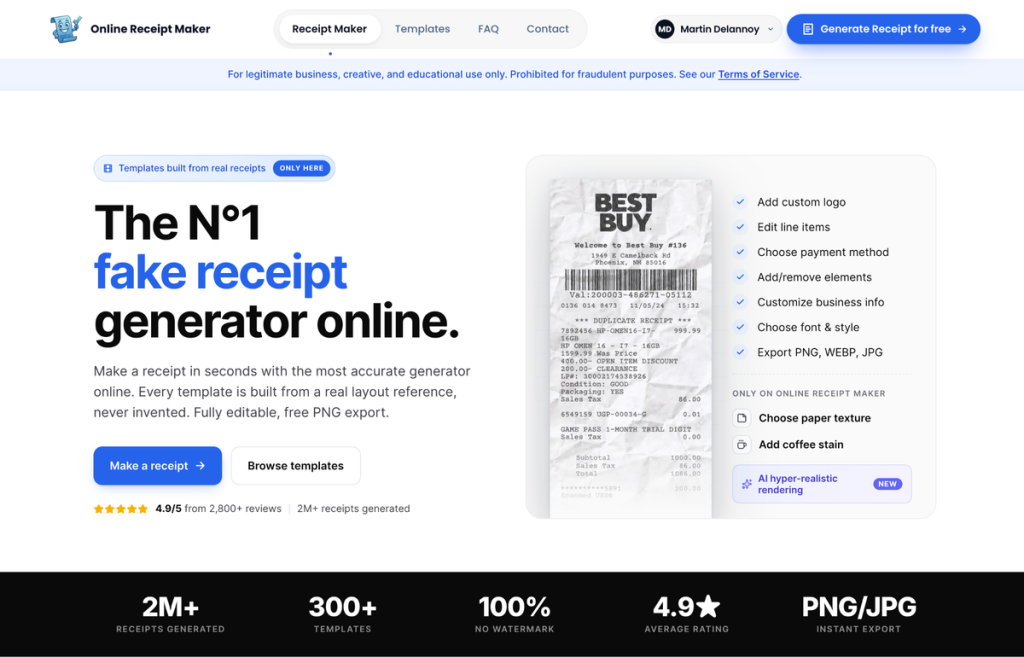
Online Receipt Maker is the one I would hand a prop assistant first, mainly because of the details that matter on camera. You set any date and time, drop in a believable location, edit the items to fit the scene, then add the touches that sell it physically: switch the paper to thermal texture, add a coffee stain, drop in a fold crease so it looks like it has lived in a pocket. There is even a pass that adds the faint ink unevenness real thermal printers produce, which reads far better under lights than a crisp digital print.
When you need volume, not a single showpiece
Dressing a set or filling a wallet is a different job from crafting one hero prop. Here speed wins.
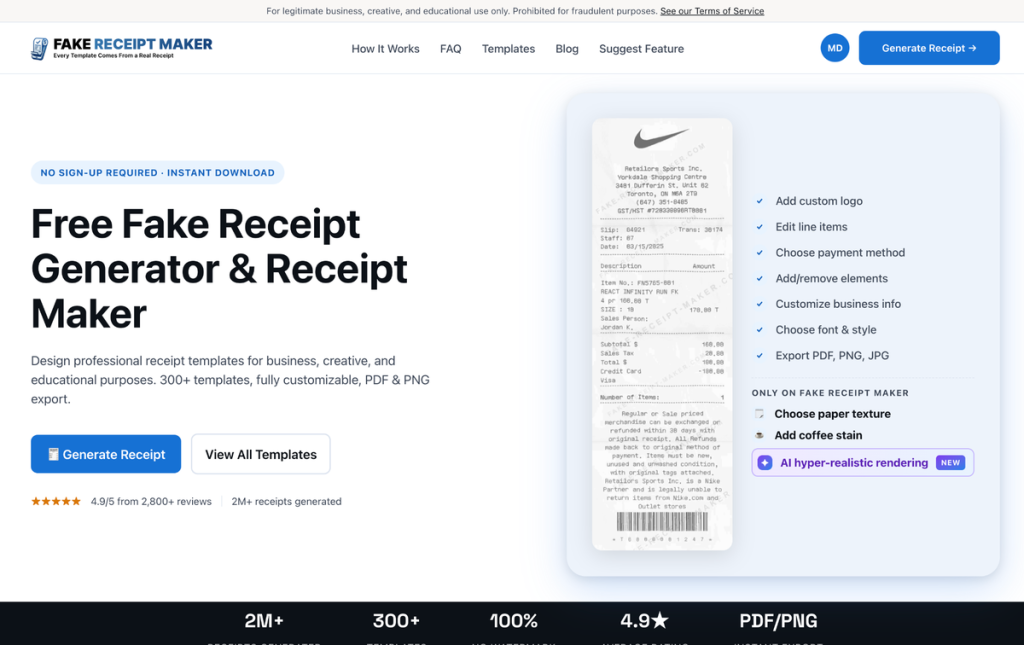
Fake Receipt Maker gets you from template to export in three steps, with PDF output that sends straight to a printer for a batch run. For handing slips to twenty background actors or stuffing a prop wallet, that quick turnaround is the entire point, and the result is consistent across the whole set rather than drifting from one hand built receipt to the next.
Tricks that make a screen receipt convincing
A few habits separate props that hold up from ones that do not. Match the era and the brand, so a coffee receipt has its rewards line and a gas receipt has its pump number rather than a generic slip with a logo. Make the math real, because freeze frame sleuths check the totals first. Age it physically, since a slightly worn, stained or folded receipt reads as authentic while a pristine one reads as a prop. Keep the timestamp plausible against the store’s hours. And if it is going close to camera, print on the right stock, because thermal paper behaves differently under lights than copy paper.
Beyond narrative film
It is not only scripted productions. Editorial photographers and food stylists use printed receipts as quiet storytelling props, the crumpled slip beside a coffee cup that makes a flat lay feel lived in. Commercial shoots need brand plausible receipts that do not expose a real company’s data. Music videos, sketches and short films lean on the same trick. Anywhere a receipt has to appear in frame and read as real, the workflow is identical: pick an accurate template, edit it to the scene, age it, print.
Keep it on the right side of the line
Worth saying plainly, because props sit so close to the real thing: these tools are for legitimate creative work, and both sites state that openly on their own pages. Using a generated receipt to actually defraud someone, like faking an expense claim or a return, is illegal no matter how convincing the prop is, and both services prohibit it. For storytelling, photography and content production, though, this is exactly what the tool was built for.
Bottom line
A receipt is invisible when it is right and glaring when it is wrong. The art departments that have stopped rebuilding them by hand and started from scan accurate templates get better results in a fraction of the time, which frees up budget and schedule for the props the camera really does linger on. Pick the tool that fits the shoot, age the paper, and let the receipt disappear into the scene the way a good prop should.