

A car accident can leave people feeling confused about what to do next. Even when a collision appears relatively minor, injuries or vehicle damage may become more apparent after the initial shock has passed. Taking appropriate steps after an accident can help protect your health, preserve important information, and make it easier to address insurance and legal concerns.
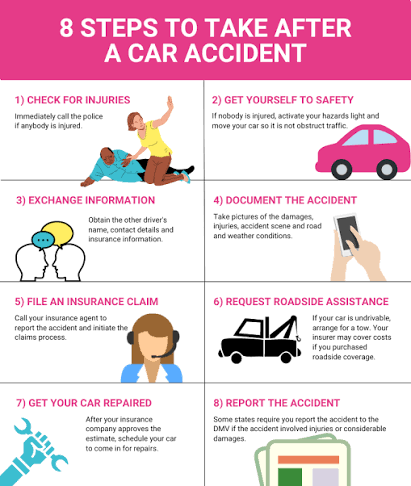
The first priority after a collision should be safety. If possible, move to a safe location without leaving the scene and check whether anyone needs emergency medical assistance. Serious injuries should receive immediate attention, and emergency services should be contacted when necessary.
Calling the police can also be important, particularly when there are injuries, significant vehicle damage, or disagreements about what happened. An official accident report may provide useful information about the circumstances of the collision.
If it is safe to do so, take photographs of the vehicles and surrounding area. Pictures can document vehicle damage, road conditions, traffic signs, visible injuries, and other details that may become difficult to establish later.
Drivers should exchange appropriate contact and insurance information. It can also be helpful to obtain contact information from people who witnessed the collision. Witnesses may remember details that the drivers did not notice at the time.
Medical attention should not be ignored. Some injuries do not produce obvious symptoms immediately after an accident. A person may feel fine because of the stress and adrenaline associated with the collision and experience discomfort later.
Keeping medical records is particularly important if treatment becomes necessary. Save bills, appointment information, prescriptions, test results, and other documentation related to injuries caused by the accident.
For people seeking information about a Car Accident Lawyer Greensburg PA, one important consideration is how responsibility for the collision will be determined. Insurance companies may examine police reports, photographs, witness statements, vehicle damage, traffic laws, and other evidence when evaluating a claim.
Drivers should be careful when discussing fault immediately after a collision. It is appropriate to exchange information and cooperate with authorities, but people should avoid making unnecessary statements about who was responsible before all of the circumstances are understood.
Insurance companies may contact drivers after an accident. An adjuster may ask questions about the collision and injuries. Providing accurate information is important, but individuals should also understand what they are being asked and avoid guessing when they do not know an answer.
Vehicle damage should be documented carefully. Repair estimates, towing bills, rental car expenses, and other accident related costs should be retained. Even if the vehicle appears to have only minor damage, a professional inspection may identify problems that are not immediately visible.
If an injury affects the ability to work, employment records can become relevant. Information about missed work, reduced hours, or lost income may help document the financial impact of the accident.
It can also be helpful to keep a personal record of recovery. Notes about pain, medical appointments, physical limitations, and changes to everyday activities can help preserve details about how the injury has affected your life.
Social media should be approached carefully following an accident. Posts, photographs, or comments can sometimes be taken out of context. Avoiding detailed public discussions about the collision or recovery can reduce unnecessary complications.
Not every accident results in a legal claim. Some collisions involve relatively minor damage and no significant injuries. Other accidents may result in substantial medical expenses, long term limitations, lost income, or disputes about responsibility. The seriousness of the circumstances can influence whether legal advice is appropriate.
Pennsylvania law can also impose deadlines for pursuing certain claims. These deadlines may vary depending on the type of claim and the parties involved. Waiting too long to investigate an accident can also make evidence more difficult to obtain.
A Personal Injury Attorney Greensburg may review the circumstances of a collision and explain potential legal options when another party may have caused an injury. This can be particularly useful when liability is disputed or injuries have created significant financial consequences.
Evidence can become increasingly important when an accident is contested. Traffic camera footage, surveillance recordings, vehicle data, photographs, medical records, and witness testimony may all help establish what happened.
Drivers should also follow medical recommendations after an accident. If a doctor recommends follow up appointments, physical therapy, diagnostic testing, or other treatment, maintaining appropriate care can be important for recovery.
Some accidents involve multiple vehicles, commercial vehicles, pedestrians, or other complicated circumstances. In these situations, determining responsibility may require examining the actions of several parties rather than relying on a simple account from one driver.
The aftermath of an accident can be stressful, but taking organized steps can make the situation easier to manage. Prioritizing safety, seeking medical attention, documenting the collision, preserving records, and communicating carefully with insurance companies can all be useful.
When an accident causes serious injuries or creates a dispute about responsibility, obtaining legal guidance can help an injured person understand the process and make informed decisions. The appropriate course of action depends on the facts of the collision and the individual’s injuries and losses.