

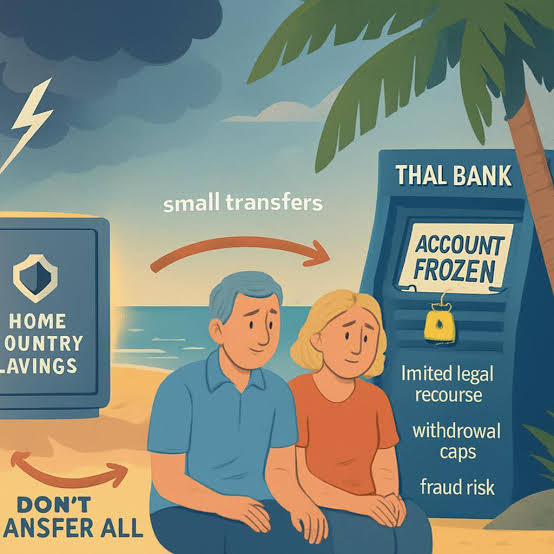
Moving abroad does not make an investment portfolio disappear, but it can change what you are allowed to do with it. A brokerage account that worked normally from Amsterdam may become restricted after its owner moves to Dubai, Toronto, or Singapore. An investment app may still open on the same phone while deposits, purchases, or withdrawals quietly become subject to different rules.
This is why the question has no universal yes-or-no answer. Some providers let customers retain their accounts with full access. Others allow existing assets to remain but stop new purchases. A few require the customer to transfer or close the account because they do not serve residents of the new country.
The critical detail is usually residence, not the passport in the customer’s pocket. Financial firms build their services around licences, legal entities, tax reporting duties, payment partners, and country-specific product rules. A person can remain a Dutch citizen while no longer qualifying for the account arrangement originally offered to residents of the Netherlands.
The worst time to discover this is after the move, when the old phone number has expired and the platform asks for fresh proof of address before releasing funds. A better approach is to treat investment accounts as part of the relocation plan, alongside banking, insurance, housing, and taxes.
Your New Address Can Change What an Account Allows
Consider a Dutch software consultant who accepts a two-year position outside the European Union. She keeps the same passport, email address, laptop, and investment goals. From her perspective, nothing about the account has changed except the address. From the provider’s perspective, however, the customer may now fall under a different regulatory framework and a different service region.
That distinction can affect several parts of an account. The provider may be permitted to hold assets for an overseas customer but not market new investments to that customer. It may allow sales and withdrawals while blocking purchases. Recurring investments can stop, margin privileges can be removed, and access to particular funds, derivatives, or digital-asset services can change. Even when the account remains open, its practical use may be narrower than before.
A temporary trip is usually different from a genuine move. Logging in while on holiday does not normally change a person’s legal residence. Relocating a home, employment, tax position, and everyday banking relationship may do so. Providers commonly ask customers to keep personal details current, and an unexplained gap between the declared address and later documents can trigger additional checks.
Ignoring an address request is risky. At first, the application may appear to work as usual. The problem often surfaces during a larger withdrawal, a compliance review, or an identity-document renewal. If the platform cannot reconcile the account profile with the customer’s current residence, access may be limited until new evidence is supplied.
Customers should therefore ask a precise question before moving: “What services will remain available to a resident of my destination country?” Asking whether the app “works abroad” is too vague. An app may load while trading is restricted. A debit card may function while bank transfers are unavailable. A portfolio may remain visible while certain assets cannot be purchased or transferred.
Get the answer through the provider’s official support channel and keep a copy. The response should cover the account type, destination country, products held, funding methods, and any deadline for updating details. A forum post from another expatriate can identify possible issues, but it cannot confirm the terms that apply to a specific account today.
Check Which Legal Entity and Regional Route Serve the Account
A global financial brand can operate through several legal entities. Its website may also use different country domains and language paths. These details matter because the familiar logo does not by itself identify which company holds the account, which terms apply, or which regulator oversees the service.
A Dutch-language link such as Aanmelden bij Binance, meaning “sign up with Binance,” illustrates the point. The destination uses accounts.binance.bh, and .bh is Bahrain’s country-code domain. The URL also contains /hu/, a path commonly associated with the Hungarian language locale. Dutch anchor text does not turn that destination into a Netherlands registration route, and the URL alone does not establish whether a service is available or authorised for a particular Dutch resident.
This combination is not automatic evidence that a page is fraudulent. International companies can maintain multiple domains, redirect language routes, and serve customers through different subsidiaries. The practical issue is that language, domain, and legal service region are separate facts. Each one needs to be checked rather than inferred from the other two.
Start by reading the terms presented during registration or in the existing account. Look for the full legal name of the contracting company, its registered address, and the section explaining which countries it serves. Then compare that entity with the relevant official register. In the Netherlands, the Authority for the Financial Markets maintains a register of crypto-asset service providers with an authorisation or notification from the AFM or another EU Member State supervisor. The register also indicates the services attached to an entry.
A brand search is not always enough. The company named in the terms may differ from the consumer-facing brand, and several companies in the same group may have similar names. Match the exact legal entity and the services it claims to provide. If the customer is moving to another country, the same check should be repeated with the regulator or official register in the destination market.
The payment route deserves the same attention. A deposit screen can display the name of a bank, payment processor, or group company rather than the public brand. That can be legitimate if the relationship is clearly disclosed in the logged-in deposit flow. It becomes a concern when a person in a private chat instructs the customer to send money to an unexplained account that does not appear in the platform’s official instructions.
Before depositing, confirm the supported currency, beneficiary name, payment reference, and whether the sending bank must be in the account holder’s name. Do not assume that a route available to one regional entity will work for another. A successful small transfer proves only that the destination can receive funds; it does not prove that the deposit will be credited to the correct regulated account.
Expect Changes to Verification, Funding, Products, and Tax Records
The most visible effect of relocation is often a new identity check. A provider may request a recent utility bill, government registration, tenancy document, residence permit, or bank statement showing the new address. The accepted documents and their age limits vary. Preparing several current documents is sensible because a mobile-phone bill that one firm accepts may be rejected by another.
Funding can also change even if the portfolio stays open. The customer’s old bank may restrict services after emigration, while the investment provider may accept deposits only from bank accounts in supported jurisdictions. A new local account may use another currency and payment network. This can introduce conversion costs, correspondent-bank fees, longer processing times, or a different beneficiary name.
A common mistake is to focus on deposits and forget withdrawals. Before adding more money, check where the account can send funds after the move. Some providers require a withdrawal to return to the original funding source. Others insist on a verified bank account held in the customer’s own name. If the old bank account will be closed, the customer should learn how to approve a replacement while all documents and authentication methods are still available.
Product access can become uneven. Ordinary shares may remain tradable while leveraged products are disabled. A fund available in one market may not be offered to retail customers in another. Digital-asset features such as staking, lending, derivatives, or local-currency purchases may have separate eligibility rules. The fact that one feature remains visible in the interface does not guarantee that every feature is available under the new residence status.
Relocation also creates a record-keeping problem. Annual statements may be issued under different formats, currencies, or legal entities. The departure year can include activity from two countries, and historical cost information may be needed long after an account changes. Download transaction histories, fee records, trade confirmations, deposit and withdrawal logs, and year-end statements before access changes.
Tax treatment depends on the countries involved, the date residence changes, the assets held, and the customer’s individual circumstances. Moving does not necessarily create an immediate tax charge, but assuming that nothing changes is equally unsafe. An adviser familiar with both jurisdictions can explain reporting duties and any consequences of selling, transferring, or retaining assets. The operational task is simple: preserve complete records so that advice can be based on evidence rather than reconstructed memories.
Security details deserve equal attention. A customer who loses an old SIM card may also lose access to text-message verification. An email account linked to a previous employer or internet provider can create the same problem. Before moving, replace fragile recovery methods, store backup codes securely, and confirm that the registered phone number will continue working. Account restrictions are difficult enough without a simultaneous authentication failure.
Prepare the Account Before You Pack
Begin with an inventory. Record each bank, broker, retirement account, investment app, and digital-asset platform you use. For every provider, note the legal entity shown in the terms, the declared country of residence, the main funding bank, the withdrawal destination, the authentication method, and the products currently held. This turns a vague concern into a list of decisions.
Next, contact each provider through a channel reached from its own website or app. State the destination country and expected move date. Ask whether the account can stay open, whether trading will continue, which documents will be required, and whether any assets must be transferred. If support gives a general answer, ask for the policy page or written terms that support it.
Do not hide the move by retaining an old address or using a VPN to appear as though you are still at home. A false profile can create a larger compliance problem when the provider later reviews a withdrawal or requests proof of address. Updating details truthfully may lead to restrictions, but discovering those restrictions early leaves time to choose an orderly response.
That response does not always require selling everything. Depending on the account and destination, the provider may allow an in-kind transfer to another institution, permit holdings to remain in a limited account, or provide a defined period for closure. Selling without checking can create transaction costs, market exposure, and possible tax consequences. Waiting until access is frozen can be just as costly. The useful decision is the one made after both providers confirm what they can accept.
Keep the old funding account open long enough to settle pending transfers, dividends, refunds, and verification checks, if the bank permits it. Confirm any closure timetable directly with the bank. At the same time, establish a valid account in the destination country and learn whether the investment provider will recognise it for withdrawals. Do not wait until money is urgently needed.
Download records in formats that can be read without the app. A PDF statement is useful for formal evidence, while a CSV transaction export can help with later analysis. Save copies in an encrypted location rather than only on the phone used for authentication. Record official support case numbers and the date of each policy confirmation, since service availability and terms can change.
Finally, treat the first login after the move as a verification moment, not a trading opportunity. Check the displayed legal entity, address status, available products, deposit instructions, and withdrawal destination before placing a new order. If anything differs from the written information received earlier, stop and ask for clarification.
Keeping an investment account after moving abroad is often possible, but continuity should never be assumed. The account may remain open while its functions, payment routes, or governing entity change. A careful review before departure protects more than access. It gives the investor time to preserve records, choose legitimate alternatives, and avoid making a rushed financial decision from a new country.