

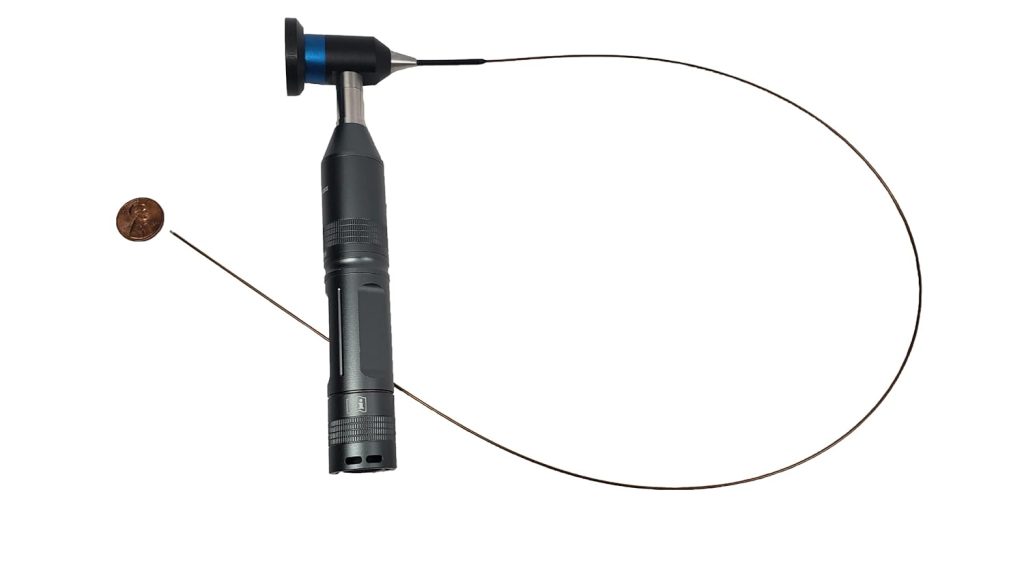
In the world of modern inspection and diagnostics, visibility matters more than ever. Engineers, technicians, and researchers rely on tools that allow them to see inside confined spaces without dismantling entire systems. Among the most revolutionary advancements in this field is the micro-fiberscope—an ultra-thin optical device that combines flexibility, clarity, and precision. The thinnest borescope available today can measure less than half a millimeter in diameter, providing access to areas previously thought impossible to inspect. This remarkable innovation is transforming multiple industries where precision and accuracy are paramount.
1. Aerospace Engineering
Few sectors demand such rigorous standards of inspection as the aerospace industry. Jet engines, fuel lines, and turbine blades are intricate systems where a single imperfection can lead to catastrophic failure. Micro-fiberscopes have become indispensable tools for technicians inspecting these components. Their small diameter allows engineers to examine the interior surfaces of critical parts without disassembly, saving both time and cost. In particular, they are used to detect micro-cracks, corrosion, and residue buildup inside turbine engines or hydraulic systems. With the thinnest borescope available, aerospace teams can achieve enhanced visual clarity in even the tightest tolerances of aircraft assemblies.
2. Medical Device Manufacturing
Precision inspection is equally crucial in the field of medical technology. Devices such as catheters, stents, and surgical instruments require meticulous quality control to ensure patient safety. Micro-fiberscopes provide manufacturers with the ability to inspect the inner channels of ultra-thin medical devices where other tools cannot reach. For example, endoscope manufacturers use them during production to confirm that welds, joints, and optical fibers are properly aligned and contamination-free. The capability to visualize these tiny spaces helps maintain compliance with strict regulatory standards and ensures superior product reliability.
3. Automotive and Industrial Maintenance
Automotive engineers often face the challenge of diagnosing problems hidden deep within engines or gearboxes. Micro-fiberscopes have proven invaluable in this context, enabling precise visual inspection without the need for full disassembly. They allow mechanics to examine valves, pistons, and combustion chambers to identify wear, carbon deposits, or cracks. Similarly, industrial maintenance teams use them to monitor equipment like pumps, compressors, and turbines for early signs of damage. The portability and flexibility of these ultra-thin scopes minimize downtime while ensuring more accurate maintenance decisions.
4. Electronics and Semiconductor Production
The electronics and semiconductor sectors deal with micro-scale assemblies that demand unmatched precision. A single speck of dust or minor misalignment can disrupt production or compromise device performance. Micro-fiberscopes are employed to inspect circuit boards, connectors, and wafer systems for defects invisible to the naked eye. Their fine resolution and ability to navigate confined structures make them indispensable during both quality control and research stages. As manufacturers continue to push toward miniaturization, having access to the thinnest borescope available becomes critical for maintaining performance and reliability standards.
5. Scientific Research and Forensics
In laboratories and forensic applications, micro-fiberscopes open up new possibilities for exploration. Scientists use them to examine small biological or geological samples without altering their structure. In forensics, investigators employ them to analyze evidence lodged in small cavities—such as gun barrels or locks—without contaminating the sample. Their compact size and exceptional image fidelity make them ideal for delicate or high-stakes inspections where accuracy cannot be compromised.
The Future of Micro-Fiberscope Technology
As demand grows across these industries, micro-fiberscopes continue to evolve. Improvements in optical fiber density, light transmission, and digital imaging integration are pushing the limits of what’s possible. The next generation of devices will likely feature enhanced resolution, wireless data transfer, and AI-powered defect detection.
In essence, the micro-fiberscope has become a cornerstone of precision inspection. From aerospace safety to semiconductor innovation, its applications are expanding every year. With continued advancements and the development of the thinnest borescope available, industries are now able to see the unseen—unlocking new levels of performance, safety, and innovation.